


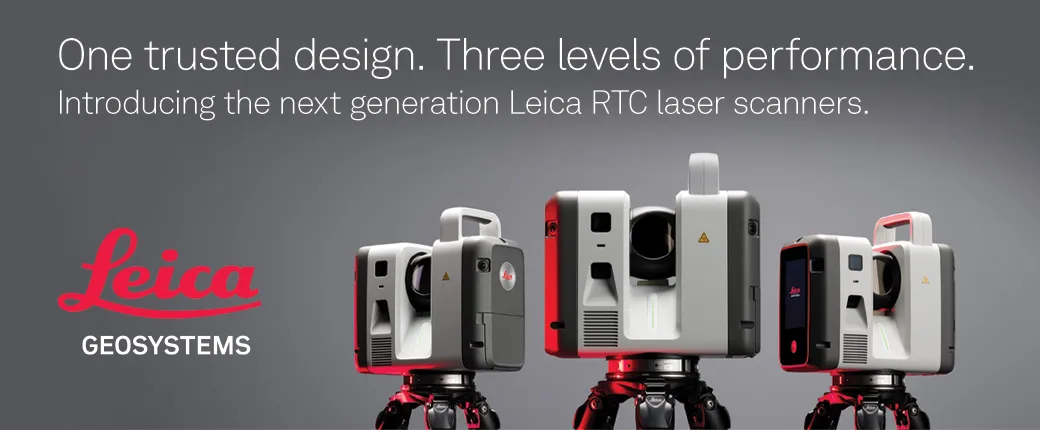
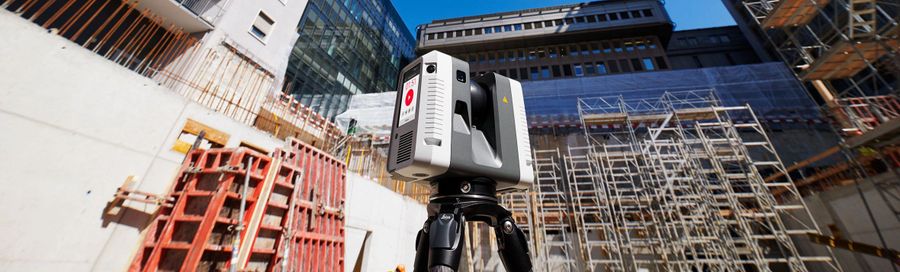
Welcome to the CR Kennedy blog, where we tackle a high-stakes question for resources engineering teams: how can the Leica RTC360 improve fabrication accuracy in mining and refinery projects?
In short: by capturing as-built reality in minutes and feeding clean, verifiable geometry directly into fit-for-fabrication models. For mining shutdown fabrication, refinery laser scanning, and brownfields plant upgrades, the RTC360 helps shorten shutdown windows, reduce rework, and support first-time-right installation.
Reality Capture, transforming real-world conditions into precise 3D point clouds, has become essential across industrial projects. The RTC360 is engineered for speed, portability, and automated field registration, producing colourised point clouds in under two minutes per scan, at up to 2 million points per second. Its VIS (Visual Inertial System) tracks movement between stations to enable reliable in-field pre-registration. The result: better decisions, fewer surprises, and less time spent in hazardous areas.
The mining and refinery challenge: complex brownfields, tighter shutdowns, zero tolerance for rework
Brownfields modifications, whether in conveyor transfer towers, crushers, thickener feed lines, tank farms, heat-exchanger bays, or refinery pipe racks—rarely align perfectly with legacy drawings. Even minor variances in flange rotations, bolt patterns, or centre-to-centre offsets can trigger clashes, hot-work, delays, and costly rework.
A scan-first approach using the RTC360 provides dependable truth data for point-cloud-to-fabrication workflows that reflect actual site geometry, not assumptions. Across Australia, Reality Capture is now widely adopted in mining, engineering, and fabrication environments to eliminate measurement uncertainty, streamline modelling workflows, and support digital twins for long-term asset management.
Why the RTC360 stands out for mining shutdown fabrication and refinery upgrades
- Fast capture, minimal disruption: colourised scans in under two minutes reduce time in hazardous areas and limit operational impact.
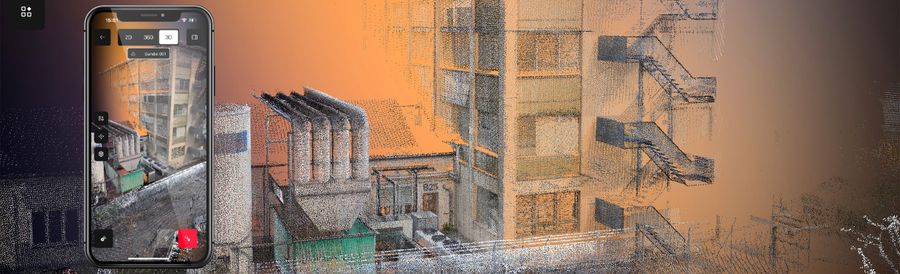
- Automated, targetless pre-registration (VIS): detects movement between stations and enables efficient in-field alignment with Cyclone FIELD 360.
- Low-noise, high-detail point clouds: ideal for accurate modelling of structural steel, pipe spools, and mechanical interfaces.
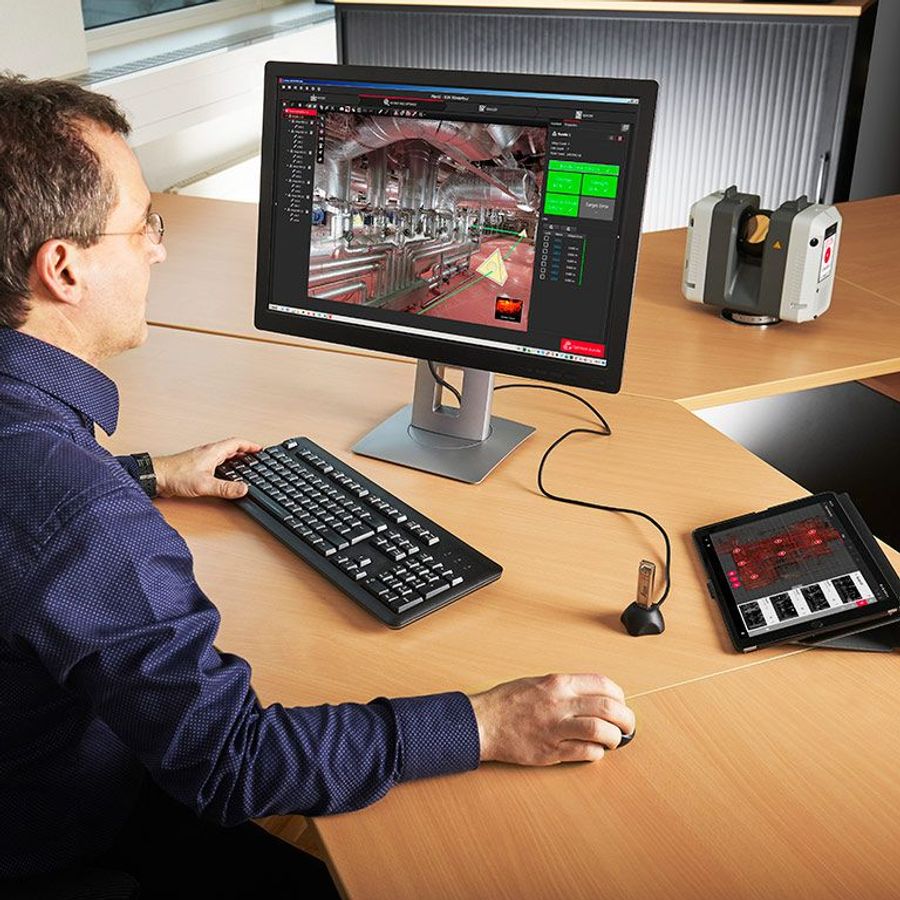
- Streamlined office workflow: Cyclone REGISTER 360 PLUS enables fast dataset unification, cleaning, and export into common CAD/BIM formats.
- Cloud-ready collaboration: Leica’s cloud visualisation tools support stakeholder review without heavy desktop installations.
- Geo-Tags in the field: capture notes, images, and voice recordings tied directly to scan locations for improved QA and safety documentation.
Where the RTC360 delivers immediate value on site
Conveyors and transfer towers: Capture true centre lines, skirt geometry, pulley locations, and guarding to enable clash-free chute, liner, and structural upgrades.
Pipe spools and tie-ins: Lock in accurate flange rotations, bolt patterns, and offsets to support reliable, first-time-right spool fabrication.
Thickener circuits and pumping skids: Verify baseplate flatness, pump alignment, and clearance constraints in congested or restricted areas.
Tank farms and heat exchangers: Document penetrations, access ways, cable trays, and structural supports while coordinating cranage and installation sequences with confidence.
Scan-to-Fab workflow with RTC360 (mining and refinery focus)
- Plan the capture: define scan stations, required density, HDR imagery needs, and ensure appropriate VIS coverage.
- Capture and annotate: execute rapid scans and add Geo-Tags for hazards, tie-ins, isolation points, or QA references.
- Field QA: verify coverage within Cyclone FIELD 360 and rescan immediately if required.
- Register and refine: unify datasets in Cyclone REGISTER 360 PLUS, remove noise, and export fit-for-purpose formats.
- Model and validate: build fabrication models, run clash detection, and confirm tolerances directly against the point cloud.
- Communicate and approve: share cloud-based views to align engineering, fabrication, and site teams before mobilisation.
Technical highlights that matter for industrial plants
- Under-two-minute scans: high-density, colourised data with minimal disruption to operations.
- 2 million pts/sec capture rate: precise detail for modelling flange faces, structural steel, and mechanical interfaces.
- VIS-enabled pre-registration: accelerates workflows while maintaining reliable alignment between setups.
- Portable design with collapsible tripod: compact and lightweight for movement through congested plant areas.
- End-to-end Leica ecosystem: seamless workflow from FIELD 360 → REGISTER 360 PLUS → CAD/BIM → cloud.
- Integrated documentation (Geo-Tags): supports safer shutdown planning and structured QA processes.
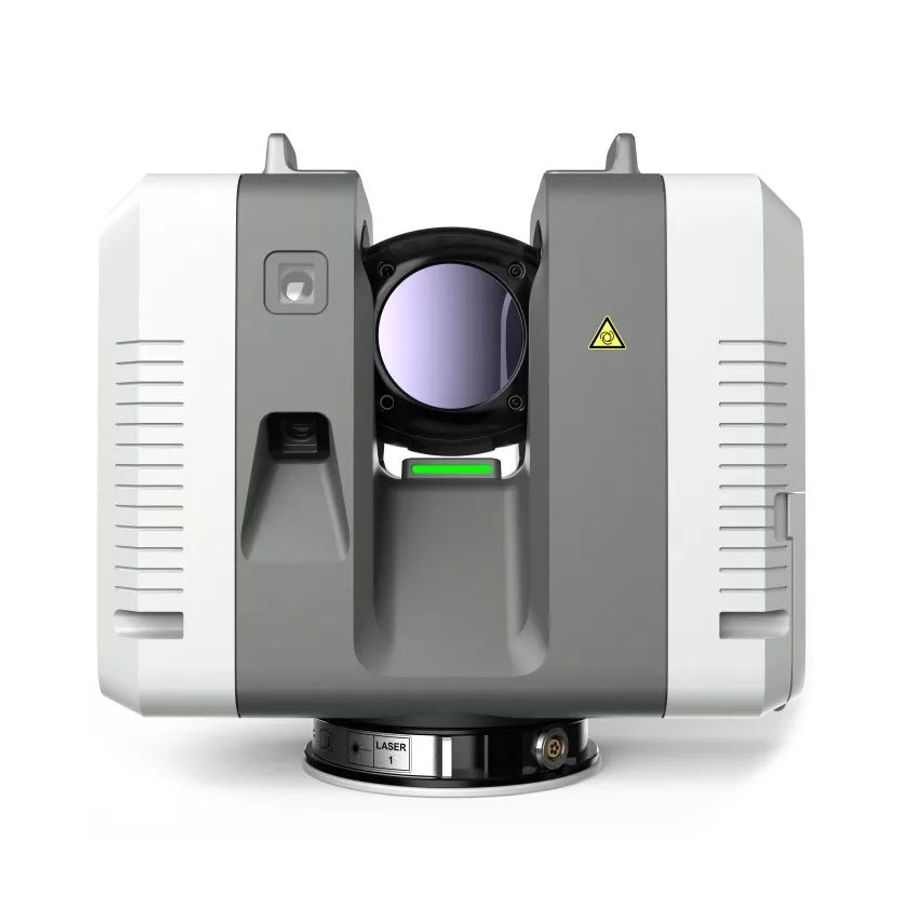
The Leica RTC360 at a glance
Speed and detail: up to 2 million pts/sec with colourised scans in under two minutes.
Accuracy by design: low-noise data supporting confident modelling and clash avoidance.
VIS pre-registration: tracks scanner movement to enhance field productivity.
Integrated workflow: FIELD 360 → REGISTER 360 PLUS → CAD/BIM.
Field documentation: embed images, notes, and voice tags directly within the dataset.
Explore RTC360 on our site: Leica RTC360 | Learn more about Reality Capture.
FAQ for mining and refinery teams
Q: How much faster is scanning compared to traditional measurement?
A: With colourised scans in under two minutes and automated pre-registration, teams can capture entire plant areas significantly faster than manual measurement methods, while also improving data completeness.
Q: Is the point cloud accurate enough for fabrication?
A: Yes. The RTC360 produces low-noise, high-detail data suitable for modelling structural steel, pipe spools, mechanical components, and brownfields tie-ins with confidence.
Q: Do we need specialised software to view the data?
A: Leica’s ecosystem includes cloud-based sharing and lightweight visualisation tools, enabling stakeholders to review data without complex installations.
Q: Can photos and notes be linked to scans?
A: Absolutely. Geo-Tags allow images, text, and voice notes to be captured and attached directly to scan locations.
Conclusion: scan first, fabricate once
For mining shutdown fabrication and refinery laser scanning projects, the Leica RTC360 delivers the speed, fidelity, and workflow integration required to transform plant reality into dependable fit-for-fabrication outputs. By standardising as-built capture early in the shutdown cycle, teams can reduce rework, minimise risk, and maintain production schedules—particularly across Western Australia’s demanding resources operations.
Next steps: Review the RTC360 specifications and visit our Reality Capture hub for workflow guides and updates.
